Development · August 27, 2026
Yes, Yes, Yes Hitting Approach for Young Baseball Players
Tad Reida
A hitter’s thought as the pitch is coming in should be “yes, yes, yes.” He is anticipating the swing instead of waiting to see the pitch and then trying to make the decision in the air.
It is much easier to shut a swing down by saying “yes, yes, no” than it is to stand there thinking “maybe, maybe, maybe.” By the time he finishes deciding, the ball is already by him.
That is the hitting approach I want young baseball players to learn. It is not a slogan you yell from the fence. It is a habit you build in the yard and then take into the box on Saturday.
“Maybe, maybe, maybe” is how the pitch gets by him
The reason this matters is simple physics, not a coaching fad. Once the ball leaves the pitcher’s hand, there is almost no time left. The swing itself takes around 150 milliseconds, and the brain still has to tell the body to go. If he is still deciding whether this is “his pitch,” the fastball he actually wanted is already in the catcher’s mitt.
High-level hitters talk about being on go until the ball tells them to stop. The take is the decision. The swing is the default. You will see big leaguers start and then hit the brakes when it is clearly not a strike. What you will not see is a good hitter standing there hoping it is a ball and then trying to catch up.
Waiting is how he gets late. Guessing is how he gets out in front. “Yes, yes, yes” sits in the middle of those two mistakes, and it is the thought that actually gives him a chance to be on time.
Why young baseball players should be more aggressive at the plate
Young hitters should be more aggressive at the plate than older, seasoned hitters. They need to learn a “yes, yes, yes” approach. They need to expect strikes and only take it if it is a legitimate ball.
What usually happens is the opposite. Dads and coaches start talking about “good at-bats” and walks, and a 10-year-old turns timid. You cannot teach a kid to be on time if he is standing there hoping it is a ball. Aggressiveness is a skill, and you build it early the same way you build a barrel path.
Older hitters can hunt a smaller zone because they have seen thousands of pitches and their bat is fast enough to wait. A young hitter does not have that yet. If you put a big-league two-strike approach on a kid who is still learning to swing, you get a kid who takes until the umpire rings him up.
Look for fastballs on the outer two-thirds of the plate
The approach he should have most of the time is to look for fastballs on the outer two-thirds of the plate. Pitchers, especially young pitchers, do not like to pitch inside. Looking away also forces him to see the ball longer, which makes it easier to pick up offspeed pitches.
Being able to drive the baseball the other way is how he hits for average at a high level. That comes from a bat path that works behind the baseball and gets on plane early, not from diving out and rolling over. College pitching will live away until he proves he can hurt them there.
In batting practice, spend most of the round letting the ball travel and hitting it deep. The triangle I want my guys to hit to is over the opposite middle infielder’s head to right back at the pitcher’s head. That covers the outer two-thirds of the plate, and that is where the approach should live most of the time.
Have a purpose during batting practice. Hard line drives that one-hop the outfielders come off a direct barrel path with a barrel he can repeat. If he steps in the cage just to get some swings in, he is grooving whatever showed up that day instead of training the approach he is going to use in the game.
How dads can train a “yes, yes, yes” approach at home
Your job is not to call pitches out during the game. It is to make the approach simple enough that it can actually show up on Saturday.
Front toss is the easiest place to teach “yes, yes, yes.” You flip strikes and he is on go. Mix in a ball now and then so he has to shut it down. If he takes a strike down the middle, stop and reset the thought. If he chases something in the dirt, do the same thing. Keep it short and swing with intent instead of running a two-hour clinic. The hitting drills are built for a backyard.
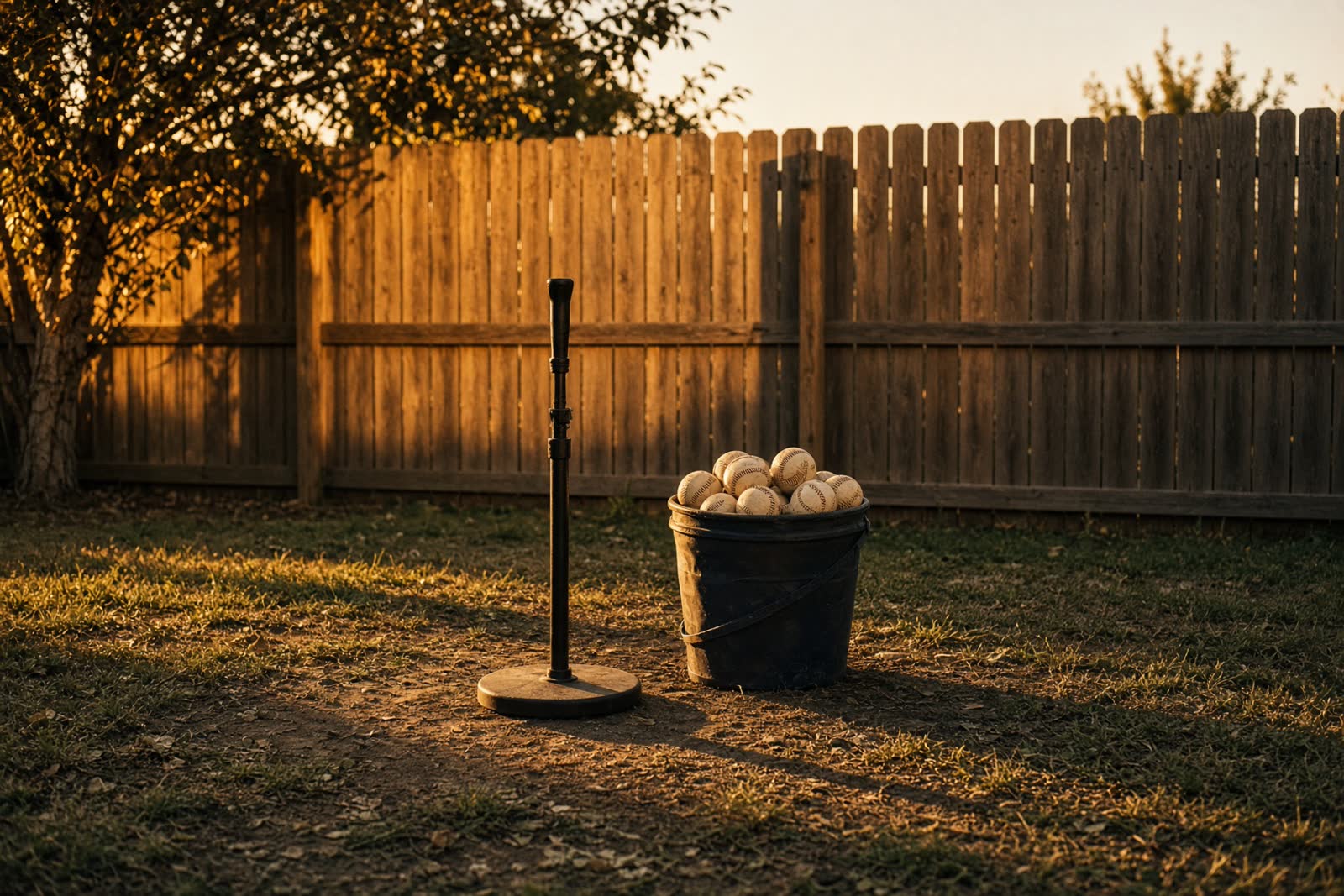
Tee work still has a place here. Put the ball where the outer two-thirds actually is — centered up, then on the back leg — and have him drive it the other way and back through the middle. The rounds are on the Development page. Hitting for average is the same idea with a plan for the plate.
Bat speed helps this whole thing, because quick hands let him see the ball longer before he has to decide. If the barrel is slow, he has to cheat and start early, and then “yes, yes, yes” turns into a guess. Build the bat speed at home so he can actually wait.
Do not turn Saturday into a lecture. Sit next to him and keep the cue to one thought: expect to swing, and only go to “yes, yes, no” when it is clearly a ball. Stack the 20 minutes and let the approach stick the same way the swing does — slowly, then all at once.
Keep the articles coming
One welcome email. Then I send when there’s something worth sending.
Email only. No texts. No 7-email funnel. Easy to leave.
Keep reading