Development · September 1, 2026
What Pujols, Gwynn, and A-Rod All Had in Common
Tad Reida
Three of the best hitters who ever played the game, and you couldn’t find three more different swings. Tony Gwynn slapped line drives through the 5.5 hole with a bat he called a paintbrush. Albert Pujols generated more raw power than almost anyone of his era. Alex Rodriguez built a swing that produced 696 home runs and a .295 career average, which almost nobody does at the same time.
Different bodies. Different swings. Different eras. All three did the same unglamorous thing, and it wasn’t the swing.
They all studied the tape
Gwynn is the most famous example. Early in his career he was in a slump, and he had his wife record his at-bats off the TV broadcast. He’d come home, watch the footage, and see exactly what he was doing — sometimes it took him fifteen swings the next day to fix it. He became so obsessive about video study that it followed him the rest of his career, well before it was standard practice around the league.
Pujols does the same thing from the other end of a career. Teammates talk about him showing up hours before games already in the cage, already watching film, already narrating pitch sequences in the dugout to the guys next to him. His own explanation for his success wasn’t talent. It was studying the game, at-bat after at-bat, year after year, long after he’d already made the Hall of Fame case on talent alone.
A-Rod’s version shows up differently. In interviews he repeats “keep it simple” almost like a mantra. His teammates used to tease him for how hard he prepared — showing up early, putting in the extra work most players skip. The simple swing thoughts existed because of the obsessive preparation behind them, not instead of it. You don’t get to “keep it simple” on Saturday if you never looked at the truth on Tuesday.
The part nobody wants to hear
None of these three got good by finding a secret drill or a new stance. They got good by watching themselves fail, honestly, over and over, and fixing one small thing at a time. That’s not exciting. It’s not a highlight. It’s a kid watching his own swing back and admitting what’s actually wrong with it.
That is the same muscle as ranking himself honestly against his own team. You can’t fix what you won’t look at. How Good Is My Son at Baseball? is that conversation in the dugout. Film is that conversation in the yard.
It’s also why the tools matter more than the hype. A stopwatch and a tee do the same job Gwynn’s tape did. They tell you the truth about where he actually stands, not where you hope he stands. How to Honestly Evaluate Your Son’s Baseball Tools is the numbers version. Put them in the Free Objective Evaluation if you want the grade in your inbox.
What this actually means for a Tuesday in the yard
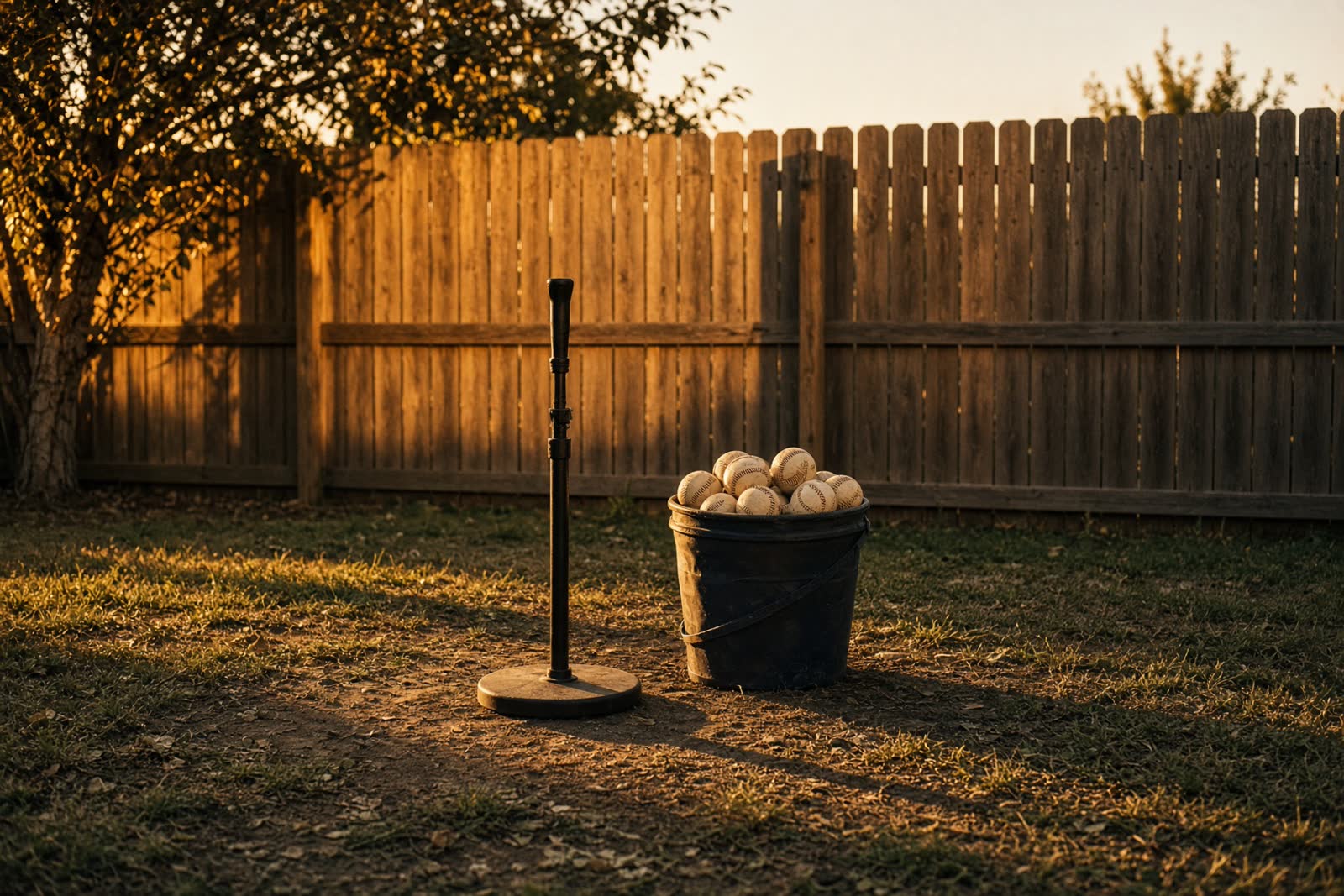
You don’t need a video coordinator. You don’t need a Hall of Fame résumé. Film ten swings on your phone. Watch them back with him, and let him find one specific thing to fix before the next round. Not five things. One. Then hit. Do it again next week.
That is the whole system those three used. The stage got bigger. The habit didn’t. Power still comes from intent and a barrel that stays through the ball — the rounds are on Hitting With Power if you want a purpose for the session after you watch the clip.
Twenty minutes is enough. Sometimes he wants two hours because he’s into the video and the next round. Let him. Sometimes ten swings and an honest look is all you get. That’s still a great day if you stack it. Start tonight’s 20 minutes.
Keep the articles coming
One welcome email. Then I send when there’s something worth sending.
Email only. No texts. No 7-email funnel. Easy to leave.
Keep reading