Development · August 27, 2026
How to Play Catch to Increase Throwing Velocity
Tad Reida
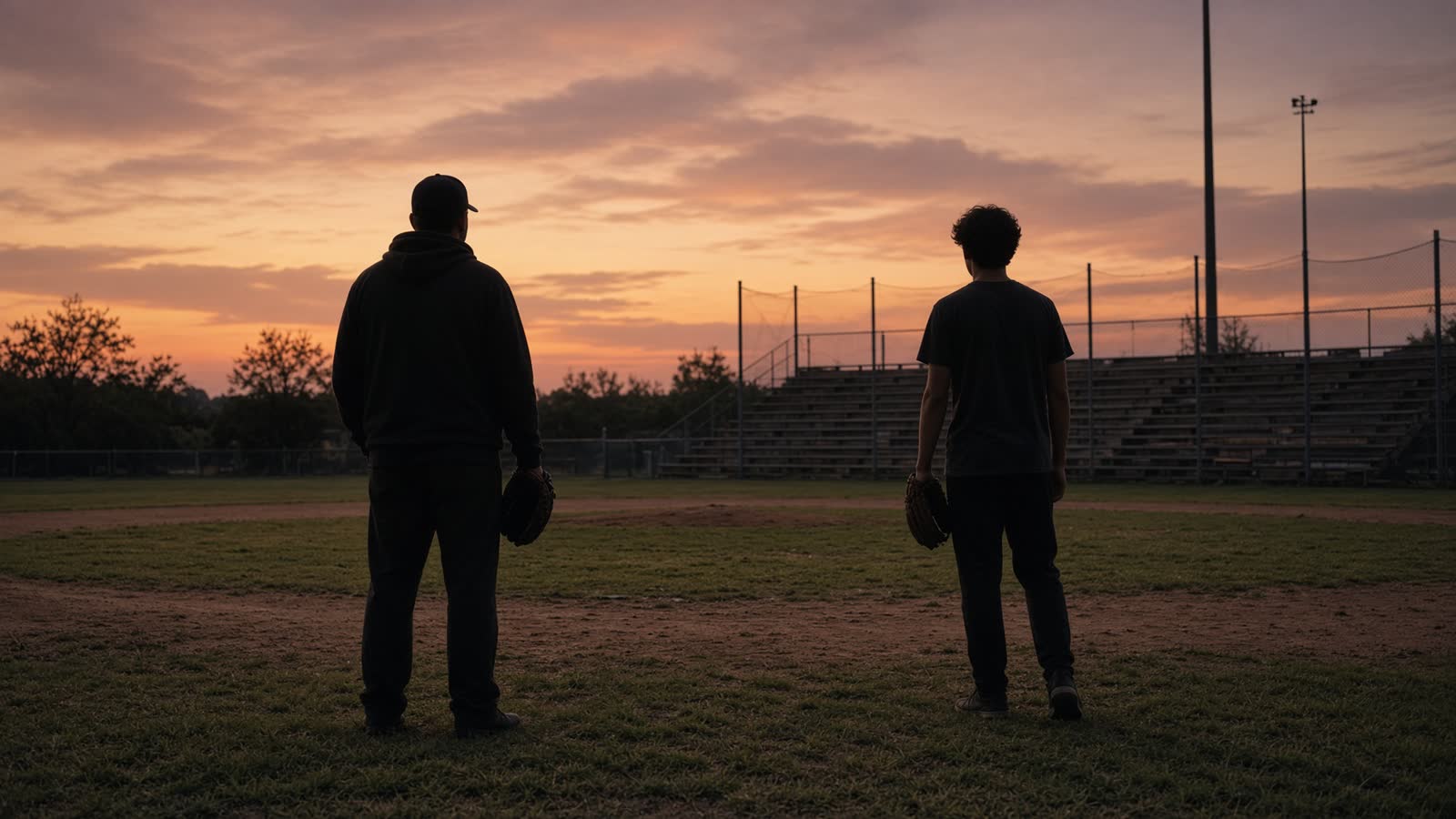
If you want to know how to play catch to increase throwing velocity, the first thing to let go of is the idea that catch is just a warmup you have to get through before the “real” work starts. Catch is the work. It is still the one sure-fire way I have seen kids actually build an arm, and it does not require a facility or a radar gun. Two gloves and any ball will do, as long as you play with a plan.
Most nights the cue is simple. Arm up when the front foot lands, and hit each other in the chest. If you get those two things, you can leave the rest of the internet’s throwing programs alone for a while.
Play catch like it matters
Have him throw twenty with his feet in concrete so he has to use his arm and his front side without stepping around the throw. Then throw ten with his glove knee on the ground, which takes the lower half out of it and keeps the arm moving. After that, start walking it back. Don’t put a fake ceiling on the distance. If the arm feels good, keep going until the throws start to fall off, because that is his max for the day, not some number a program printed.
Once he gets out there and the throws get long, come back in three steps at a time and keep throwing hard. That last part is the pull-down, and that is where velocity is actually trained. A lot of dads stop at the pretty rainbow because it looks like long toss. The rainbow is just the stretch. The work is coming back in with the arm still loose and still accelerating out in front, throwing through the chest like the target is twenty feet behind the guy receiving it.
High-level throwing has always looked like some version of that shape: stretch it out, then come back in with the arm speed still up. You don’t need their logo on a shirt to run it in a park.
How often
If he wants to throw 90, this is not a Saturday hobby. Out of season, most of the kids who got there were on a field five or more days a week, and some of those days were shorter than others. Let his arm decide how long you play catch and how far you go. A sore arm every morning is not toughness. It’s usually a sign the volume got ahead of the tissue, and a position player who can’t throw because it always hurts is watching his future get small.
A strong arm is also a healthier arm, which is the part families skip. From here on, a below-average arm is a tool that needs to be trained, not a personality trait he “just has.” The catch stuff is on The Yard, and the numbers by position are in The 3 Measurable Tools. Put what he actually throws into the Free Objective Evaluation if you want the picture on the same scale I use, then go outside tonight and play catch like it counts.
Keep the articles coming
One welcome email. Then I send when there’s something worth sending.
Email only. No texts. No 7-email funnel. Easy to leave.
Keep reading